How Rosnet's VP of Product ships internal AI tools in about 4 hours, and expects to save ~$200K a year, with altspark
 TJ Coyle, Co-founder and CEO·5 min read
Gavin Guest, VP of Product at Rosnet, was building useful tools with Claude Code, but they lived on his laptop and depended on people remembering to run them. With altspark, Rosnet now runs a call processing engine. On a schedule, it processes every call through the lens of each department that needs it and gives the whole company one shared source of truth. A useful tool takes about four hours to build. Five tools reach every team in the office, including the exec team. In Gavin's own rough estimate, they'll save about $200,000 a year of effort once they're fully running.
At a glance
- ~$200K/yr in effort, Gavin's own estimate once the tools are fully running
- ~4 hours to a really useful internal tool
- 100% of calls processed automatically for every department that needs them
About Rosnet
- Company: Rosnet
- Location: Kansas City, MO, USA
- Website: rosnet.com
- Industry: Restaurant Back-of-House software
- Vertical: Restaurant technology
- Scale: Thousands of restaurant locations across major franchisees.
- Stack: Claude · Fireflies · Notion · Slack · Google Places
- Persona: Gavin Guest, VP of Product · Owns PowerCenter, Food and Labor · Owns internal tools · Team of 6
The challenge
Gavin Guest runs product at Rosnet, a leading provider of back-of-house restaurant management software for thousands of locations around the world. Rosnet uses Claude and Claude Code company-wide, and Gavin builds fast: tools and prototypes for the exec team and the office.
Market and client insight reaches Rosnet from many sources, and most of those sources come with their own AI. Fireflies, for example, records, transcribes and summarizes every call. Different teams need very different things from those calls. Marketing listens for how to position the product. Product management listens for pain points and competitive mentions. Customer teams need to hear when a specific client is struggling. Many calls matter to one team and are noise to another.
So each department built its own Claude skills, each one pulling from Fireflies through its MCP server. That caused two problems:
- Someone had to remember to run them. Insight showed up only when a person thought to go and get it. The person who knew the skill became a bottleneck: if they were on vacation, nothing got updated and the data went stale.
- Each team got its own version of the story. Multiple teams ran different skills over the same calls and came away with different outputs and different views of the market.
The tools Gavin built to fix this ran on his laptop, so nobody else could rely on them.
"I could build useful tools fast with Claude, but I had nowhere reliable to run them. That was fine until someone else needed to use the tool."
Gavin Guest, VP of Product, Rosnet
How altspark solved their problem
altspark's MCP server let Claude Code build straight into altspark. Gavin kept building the way he already did, and his tools moved off his laptop onto altspark, where they run on schedule for everyone.
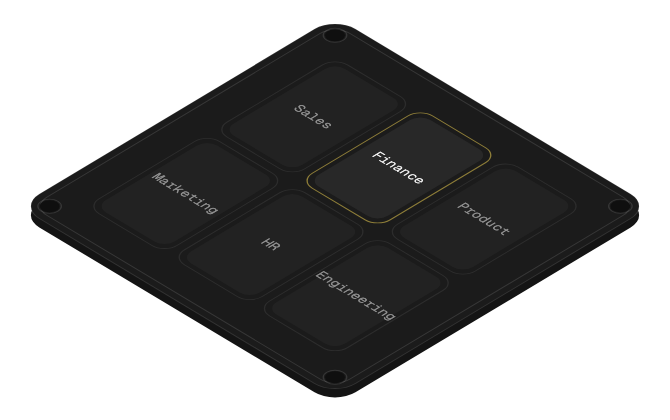
The Market Insights Engine (live). Every call recorded in Fireflies is processed automatically through the lens of each department that needs it:
- Marketing gets positioning and messaging signals.
- Product gets pain points and competitive analysis.
- Client-specific issues are flagged for whichever team owns them.
The engine pulls out what each team needs and ignores what it doesn't, so a call that's irrelevant to marketing never clutters marketing's view. Results land in Notion before anyone goes looking, and they arrive exactly how Marketing wants them. No one has to remember to run a skill, and nothing waits on one person being in the office.
Every team now works from one shared source of truth instead of its own private pass over the same data. Each source is processed once, cut up for each team and served to them, rather than every person running their own extraction and getting their own answer.
Also running on altspark, all internal:
- ELT Calendar (live, exec team). Busy executives update a shared availability and travel calendar privately through Slack.
- Office Eats (live, just for fun). A Rosnet-only restaurant review board. The company recently moved to a new part of town, and everyone has opinions on the local spots. Office Eats shows what your Rosnet colleagues like, not what strangers on Yelp think. Fitting, for a restaurant software company.
- F1 Fantasy league (live, just for fun). A custom Slack-based prediction game that pulls from a Formula 1 results API to build team camaraderie. It replaced a Docker bot that used to run on Gavin's laptop.
- RFP Responder (in beta). RFP workbooks arrive by email and the questions are pulled out word for word. Answers are drafted from a large bank of known good answers, and Rosnet's RFP lead reviews, assigns, approves and locks each one. If an answer has no source, it stays blank and is flagged "Needs SME." The biggest time savings go to the subject-matter experts who answer RFPs, some of the scarcest and most valuable people in the company. RFPs often arrive with tight turnarounds, so every hour those experts don't spend re-answering known questions goes back to the work only they can do.
"altspark is helping us solve a pile of internal business problems by getting our systems to talk to each other. It's made spinning these things up ridiculously easy."
Gavin Guest, VP of Product, Rosnet
"Truth control is the whole product."
Gavin Guest, VP of Product, Rosnet, on RFP Responder
The impact
- ~$200,000 a year in effort, Gavin's own rough estimate once the tools are fully running.
- 100% of sales calls processed for every department that needs them, on schedule, with no one remembering to run a skill and no single-person bottleneck.
- One shared source of truth for market insight, in place of a separate version for each team.
- RFP answers drafted from known good answers, which saves the company's scarcest experts time on tight deadlines.
- About 4 hours to a really useful tool, and "something mildly useful in far less."
- 5 tools live, reaching every team in the office, including the exec team.
- Several other previously neglected business needs are slated to be reviewed.